






The Rugby Nines Festival is helping drive participation, accessibility and visibility in women’s rugby league, say organisers.
The annual event in Ormskirk brought together players, coaches and supporters from across the region at Edge Hill University, showcasing and celebrating the growth of women’s rugby league across grassroots and elite levels.
Hosting the event at a local sports university aimed to introduce the sport to new audiences, particularly students.
More than 10 adult teams took part, including Super League sides St Helens and Wigan Warriors.
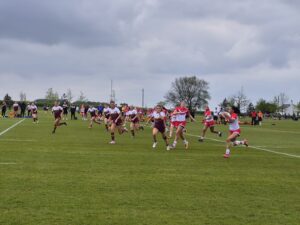
Championship sides like Widnes Vikings were also present, as well as a plethora of young academy and community teams.
The Nines format, which features shorter matches and fewer players, offers a faster, more accessible version of the sport, making it an effective way to introduce new participants and attract new audiences.
“The ultimate celebration of women’s rugby league”
The music, atmosphere and packed schedule create a contrast to the intensity of the Super League season, which is set to kick off later this month.
For organisers, that atmosphere is central to the event’s purpose.
“It’s just the ultimate celebration of women’s rugby league,” said Rugby Football League development officer Mikayla Gillespie.
“It’s about getting all the teams together, showcasing everything the sport has to offer, and just having a really fun environment.”
Unlike traditional fixtures, the event was free for anyone to attend, and players could compete across all levels of competitiveness.
Gillespie, a St Helens player, says accessibility is key to expanding the sport’s reach.
“It just makes it really accessible.
“There’s no other time when you’d have all these teams in one place that you can watch for free.
“It’s about showcasing everything the sport has to offer and having a fun environment,” she said.

Teams travelled from across the country to take part, including sides from the Midlands and the south of England.
The format allows players a rare opportunity to face different opposition.
“It’s a chance to play teams you might not come across otherwise, and for spectators, it’s just a great day out,” Gillespie said.
Developing the next generation
While the festival has a relaxed and inclusive feel, its role in player development is becoming increasingly important.
England captain and St Helens star Jodie Cunningham has been playing a key role in supporting the development of the women’s game, both on and off the field.
Cunningham is heavily involved in the academy pathways at St Helens, helping to create opportunities for younger players through the sport.
She says the growth of academy systems is helping to build a clearer pathway for the influx of girls hoping to make it into the professional game.
“The academy as a concept is relatively new…so for me it’s exciting to be giving my experience back to the young girls,” she said.
“We’re investing heavily in that pathway.
“It’s all about seeing where the next crop of talent is coming from.”
She also says rising standard

s and a higher number of girls are making the pathways increasingly competitive.
“Every year it’s more competitive, it’s harder to get a place in the squad and even harder to keep it,” she added.
Despite that, she believes the key message for young players trying to break through is confidence.
“They’ve been picked for a reason, so they need to believe that they deserve to be there.”
At grassroots level, rugby league participation continues to expand, with thousands of women and girls now involved in the sport across the UK, with an estimated 8,600 regular players.
Jodie Cunningham says there is “ever-increasing talent” in the women’s game, speaking exclusively to Mersey Sport Live.#MerseySportLive #WomensRugby #RugbyLeague #StHelens
Watch the interview below: pic.twitter.com/HKdpk2XiD2
— MerseySportLive (@merseysportlive) April 22, 2026
The Rugby Nines Festival allows academy players to showcase their abilities in a less pressurised environment, while still competing against some of the top teams in the country.
A game growing rapidly
The expansion of the women’s game is not limited to grassroots level; interest has also grown significantly at the elite level.
Globally, participation in rugby has increased by more than 30% in recent years, with over 319,000 registered female players and more than 1.3 million women and girls engaging with the sport in 2023.
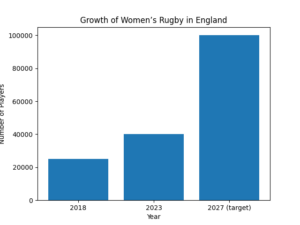
In England, the number of women playing rugby has risen from around 25,000 to 40,000 in the past five years, reflecting increased investment, visibility and opportunities within the sport.
For Women’s Super League General Manager Thomas Brindle, the progress made over the past decade has been significant.
“We’ve had over 400% growth in participants since 2016,” he said.
“We started on muddy fields, and now we’re playing at Wembley.
“We’ve gone from having no broadcast coverage to regular games on TV.”

Building a sustainable future
For organisers, the event is about more than just a one-day festival, as it is part of a long-term strategy to grow the game.
Brindle believes continued growth will depend on strengthening grassroots participation while increasing professionalism within the sport.
“We have to keep growing the community game.
“We also need to improve the environments and the opportunities at the top level,” he said.
He added that events like the Rugby Nines festival and the fun nature of the day plays a key role in that process.
“It’s about creating the right environment for players and making sure they enjoy it, because that’s what keeps them coming back.”
Congratulations to the champions of the 2026 Women's Nines Festival 👏🎉
Find out more 👉 https://t.co/qbtV04fY1W pic.twitter.com/4Rb3TjyviK
— Rugby Football League (@TheRFL) May 3, 2026
More than just a festival
Beyond the matches themselves, the event highlighted the community-driven nature of women’s rugby league.
From young girls taking part in festival matches to elite players competing at the highest level, the day brought together all parts of the sport in a single setting.
This sense of connection is key to the sport’s long-term success, helping build these pathways between grassroots and professional levels.
The growth is not just reflected in participation numbers, but in the atmosphere and opportunities created by these events.
Festivals like Rugby Nines provide a platform for players, attracting new audiences and reinforcing the importance of accessibility at every level.
As the women’s game continues to expand, events like this are helping shape the sport’s future.