




This week marked 15 years since Fenway Sports Group (FSG), headed up by John W Henry, took ownership of Liverpool Football Club for a cut-price of £300 million.
The organisation released a statement on Wednesday looking back on their decade-and-a-half-long reign as they alluded to what lies ahead for the Reds.
Henry, Tom Werner and Mike Gordon said: “This club is part of the fabric of the city and far beyond it. It connects generations and communities in a way that is truly special. Being part of that story is a privilege, and it brings a responsibility we never take for granted.”
Acquiring a Sleeping Giant
“When we first became involved with Liverpool, we knew we were joining something extraordinary, and we hoped we could restore such an incredibly storied institution to standards it had previously set – but we could never have imagined exactly how the next 15 years would unfold.”
In fact, nobody could have foreseen such success when FSG, known as New England Sports Ventures at the time, purchased the club on October 15, 2010.
Previous owners Tom Hicks and George Gillett left Liverpool in a state of financial ruin after a disastrous reign, with administration seeming a real possibility amidst a debt of £200 million owed to the Royal Bank of Scotland.
This allowed FSG, who took charge of the Boston Red Sox baseball team in 2002, to acquire their first football side for a bargain price owing to a High Court ruling.
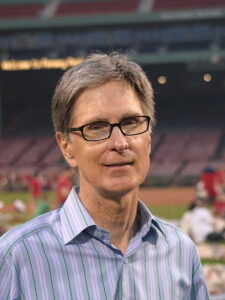
Just two days after the ownership switch, principal owner Henry and chairman Werner watched Roy Hodgson’s Reds suffer a 2-0 loss at Goodison Park against Everton, their fierce city rivals.
At the start of their brand-new era, an underperforming and uninspiring Liverpool sat in 19th place – avoiding rock bottom due to goal difference.
However, the American-based sports investment company didn’t see a struggling club who were ready to be pushed aside and take a backseat.
Instead, they saw an opportunity.
An opportunity for growth, success and a long-awaited return to the top of English football.
Trophies, Transfers and Team Spirit
FSG’s wait for their first trophy was not a long one.
In his second stint as manager, Sir Kenny Dalglish led Liverpool to League Cup success in 2012, defeating Cardiff City 3-2 on penalties.
However, the Reds went through a prolonged dry spell during the tenure of Brendan Rodgers that tested the relationship between the fans and the club itself, until the appointment of ‘the Normal One’ – Jurgen Klopp.
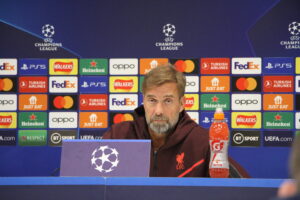
In what proved to be an era-defining decision, FSG acted fast to get their man and appointed the German to spearhead the beginning of a footballing revolution.
Under Klopp, Liverpool won seven pieces of silverware, including a return to the top of their perch winning the Premier League in 2020 – a first top-flight title in 30 years.
The Reds began their trophy haul under the former Mainz manager in 2019 following a six-year drought, when they defeated Tottenham Hotspur to claim a sixth UEFA Champions League – the most of any English club.
The women’s section has also tasted victory thanks to the American investment – picking up back-to-back Women’s Super Leagues in 2013 and 2014.
It is not just trophies that define FSG’s success across their 15-year term.
The Americans have taken a data-led approach to their transfer business across the years, and despite accusations of being tight, they have always gone about their transfer business sustainably.
Players like Phillipe Coutinho, Luis Diaz and Luis Suarez have all been sold for considerable profit whilst still contributing heavily on the pitch for the red half of Merseyside.
Whilst current fan favourites Mohamed Salah, Andy Robertson and Alexis Mac Alister were all signed for cheap prices and continue to feature for Arne Slot’s side today, as they have done across the past several years.
All allegations of stinginess have been put to bed this summer. Liverpool have enjoyed their highest-spending window, breaking the British transfer record twice with the arrival of Florian Wirtz for £116 million, followed by the £125 million signing of Alexander Isak.
Expansion, Renovation and Diversification
For all of the new signings and trophies, FSG have achieved plenty by way of their off the pitch ventures as well.
Most notably, they conducted a multi-phase expansion of Anfield focused initially on the Main Stand and then the Anfield Road end, taking the capacity from 44,000 in 2010 to over 61,000 today.
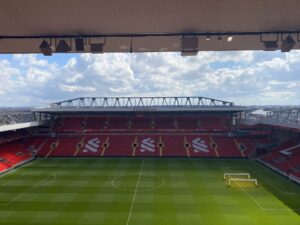
In a time where Spurs have built a glamorous £1 billion ground, with Manchester United looking to splash double that on a new venue, the Americans have done incredibly well to expand Liverpool’s stadium in a cost-effective and fan-friendly manner.
Close to £300 million has been invested in the Reds’ infrastructure, including Anfield’s redevelopment, as well as building the AXA training centre and repurposing the old Melwood space for the use of their women’s team.
In addition, last month FSG pledged £20 million for the renovation of the academy – an asset that has assisted the first team in numerous ways across recent years, providing valuable youth talent like Trent Alexander-Arnold, Curtis Jones and more recently, Rio Ngumhoa.
“Off the field, there have been times we’ve got things wrong”
In Wednesday’s message, the owners acknowledged that they have made mistakes over the last 15 years, but claimed valuable lessons have been learnt as a result.
For example, the 2016 proposal of £77 tickets was met by the Kopites with dismay and triggered thousands of fans to walk out in the 77th minute in a Premier League fixture against Sunderland.
FSG apologised for any distress caused and admitted they got it wrong.

Additionally, Henry, Werner and Gordon’s passionate backing of a breakaway European Super League did not sit right with fans.
The Reds’ supporters protested against the decision of their owners and eventually helped to overturn the prospect.
In a grovelling apology at the time, Henry said: “It goes without saying but should be said that the project put forward was never going to stand without the support of the fans.”
What does the future hold?
In their letter signed off with ‘John, Tom and Mike.’ the trio said: “Today is a day to look back with gratitude. But it’s also a reminder that our work isn’t done. There’s still so much more ahead of us – more to achieve, more to win, and more memories to make, together.”
But what exactly does that mean for Liverpool Football Club?
Well, of course FSG are eager to further contribute to their current trophy haul and have backed the squad financially to compete on all fronts for many years to come under Slot.
They are also looking to add a second football club to an already impressive sporting portfolio that consists of the Red Sox, Pittsburgh Penguins and the PGA Tour.
The Americans opted against buying Bordeaux last year due to their volatility but look set to acquire Spanish club Getafe in a bid to help Liverpool scout and develop young players.
Fans can expect to see the Reds dominate English football both on and off the pitch if Henry’s ambitions are met and delivered effectively.







 took ownership of Liverpool Football Club for a cut-price of £300 million.)