






Everton have had a successful start to life in Hill Dickinson Stadium, picking up eight points from four home games in the Premier League – their best start to a campaign since 2020.
They finally made the move over the summer, handing the keys of the historic Goodison park to their women’s team.
Moving stadiums has proved a tricky endeavour in the Premier League. West Ham United made the switch from the iconic Upton Park in 2016, now hosting teams at the London Stadium – used for the London Olympics in 2012.
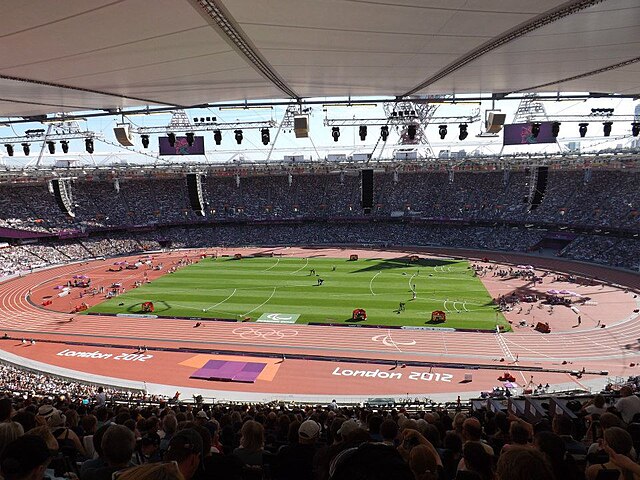
The Football Supporters’ association took a survey of nearly 8000 West Ham fans last summer – 62% were season ticket holders.
It found 71% of the fans rated the atmosphere at the London Stadium ‘poor’ or ‘very poor’ and 95% said the atmosphere was worse than Upton Park.
And 85% said that the reason (the most prevalent listed) for the poor atmosphere was because of the stadium layout and distance from the pitch.
The architect responsible for the Hill Dickinson was determined not to let this be a factor. Daniel Meis, a Los Angeles based architect, took on the daunting challenge of designing the stadium.
He talked directly with fans, even being branded as a “legend” by Tom Bowell, a season ticket holder since 1988.
Meis, in an interview with Architecture Today, said he was initially “sceptical” because Everton was “a smaller club”. But after speaking to the fans, his scepticism was put to bed, and now he even has 1878 tattooed on his wrist, the year Everton was founded.
This connection to the fans led him to making the stadium “a bowl”. The stands are as steep as regulations allow (35 degrees), leaving fans at the highest point of the stadium a whopping 35 metres above the pitch. Meis said he wanted fans “right on top of the pitch”.
Everton also hugged the regulations with the distance between fans and pitch, with the stands being as close as possible to the pitch, according to AECOM. The Premier League states the distance between stand and pitch must be at least five metres.
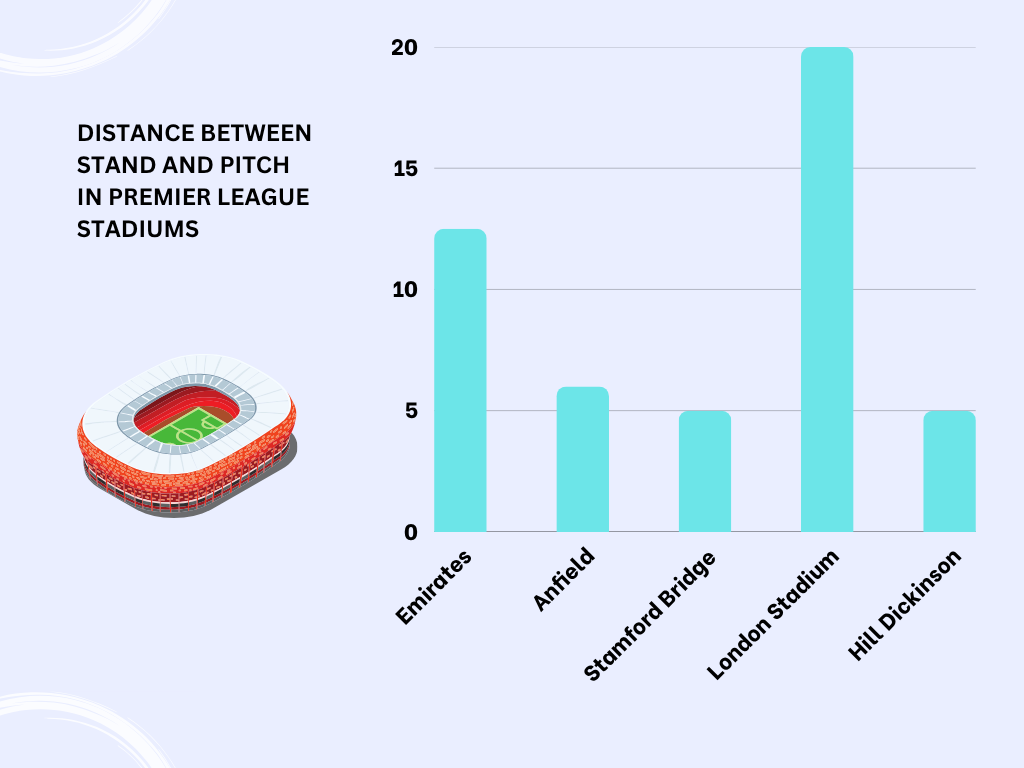
Hill Dickinson Stadium is yet to see Everton lose. They have picked-up eight points in their first four Premier League games. In their home win against Brighton, it was reported by Stadia Magazine that the stadium reached 126 decibels, the highest ever in a Premier league, and the fifth highest ever recorded in a football stadium.
After Jack Grealish’s winner against West Ham, a picture circulated social media of a fan’s watch, warning him that his environment had reached 131 decibels. This would be the second highest sound ever recorded in a football stadium – only one decibel behind the record of 132 dB, set in Beşiktaş’s Vodafone Park in 2007.
For now, Meis’s fan-friendly approach to his stadium design is paying off and fears of Everton’s booming atmosphere being quietened seem to be alleviated.
Featured image by Austin Nobobbino.