






World Number Two Jannik Sinner earned himself £4.5 million after he defeated Spain’s Carlos Alcaraz to claim the lucrative Six Kings Slam title in Riyadh, Saudi Arabia, last Saturday night.
The tournament boasts a larger prize for the eventual champion than all four of the sport’s grand slams: the Australian Open, the French Open, Wimbledon and the US Open.
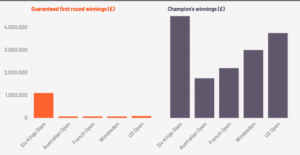
Each player received a £1.1 million participation fee with the Italian netting £3.4 million extra in prize money.
Sinner’s earnings equate to £21,635 per minute across his three matches against Stefanos Tsitsipas, Novak Djokovic and world number one Alcaraz.
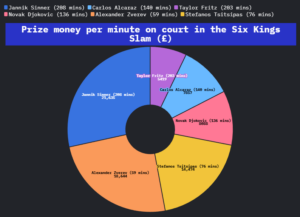
To put that into context, within just two-and-a-half minutes of the four-time grand slam winner’s first round match against Tsitsipas, he could have single-handedly covered the cost of a brand-new championship size court at a local tennis club in England.
But, for all the money at the top of the game, local grassroots clubs are struggling to achieve grants and raise funds for basic court maintenance and the day-to-day running of tennis centres.

In 2015, Hillside Lawn Tennis Club in Southport received a grant of nearly £59,000 from Sport England’s Inspired Facilities Fund to build a new championship-size court with a built-in practice fence.
This is one avenue of income for venues like Hillside, but it can prove quite difficult to secure funding through grants and loans.
The principal revenue stream of grassroots tennis clubs in Merseyside is through self-funded methods like membership fees, court hire and social events.
A yearly adult membership at Hillside LTC costs £76 and allows access to all club facilities during opening times.
Rob Hemmings has been Chairman since 1999 and claims that there are currently 179 members at the club, providing them with their biggest income stream.
He said: “Membership is our number one source of funds and after that it is probably coaching. At Hillside we rely on volunteers to help out.”
This provides vital funding for local clubs; however, it can be seen as a barrier to entry for those from lower socioeconomic backgrounds.
Another stream of revenue for Merseyside’s tennis venues is through government-backed investment.
A successful example of this is the Park Tennis Project that began in 2022 and was completed in June this year.
The scheme featured a joint £30 million contribution form the UK Government and the Lawn Tennis Association and improved 3,000 public courts in 250 local authorities with the aim of adding 500,000 more players annually.
This has benefitted some venues in Merseyside that have seen a surge in membership from those individuals who played in parks for the first time, then decided they want to join a club.
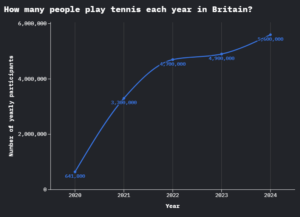
The scheme had a more direct impact on Mersey Bowman Tennis Club, located in Sefton Park, who benefitted from a £9,000 investment to improve their facilities.
Julie Porter, Chief Operating Officer at the LTA, said: “After months of hard work, we are delighted to see park tennis courts across Liverpool City Council officially open to the public, and in better shape than ever.”
However, Hemmings, who is also Participation Director at Tennis Lancashire, believes that more should be done by the LTA to focus on directly helping local clubs.
He said: “They seem to be focusing more on things like park tennis, seeing that as a way forwards and I think that is an enormous shame.
“Yes it may get people playing tennis which is good, but in the long run it is not sustainable because as a club our biggest problem is volunteers and the bigger the pool you have equals more volunteers.”
Hemmings on where the LTA have gone wrong when it comes to funding local tennis clubs. Credits: Owen Linnett.
Grassroots tennis clubs tend to be run by volunteers, so another main revenue stream is the use of fundraising.
In March of this year, Palmerston Tennis Club completed the resurfacing of three courts following a rigorous campaign to raise money.
Through the generosity of individuals and businesses, Palmerston’s crowd funder reached £11,639.
Thanks to this impressive effort, after reaching the £10k mark Sport England matched the contributions, allowing the club to continue providing opportunities for local residents and school children to get involved in tennis.
Partnerships with schools and businesses provide another revenue opportunity for tennis clubs as they can benefit through sponsorship and multi-sport organisations.
Prior to their court resurfacing Palmerston partnered with Dovedale for over a decade to deliver school sessions and extra-curricular activities.
School affiliation can aid a tennis club to monetise their partnerships as it allows them to pick up new and upcoming tennis players who can provide a steady stream of membership payments for years to come.
If you are interested in joining a tennis club, you can find local venues at https://www.lta.org.uk/play/find-a-tennis-court/