





Families across Merseyside are being priced out of winter fitness due to the increased cost of indoor sports.
As the temperature drops, indoor sports should be the affordable fallback for both adults and children to keep active. Instead, many just can’t afford it.
Liverpool City Council figures show hiring a 5-a-side pitch at Lifestyles costs £31.70, with private pitches often even higher.
Clubs typically charge £5-6 per child per week. Over a 12-week season, this could reach £150 per child or £300 for two children (addition of kit and travel.)
Adding budget gym memberships for two parents (around £25 per month each) pushes that total winter fitness bill to almost £500 for an average family of two adults and two children.
According to British gas, the average monthly cost of gas and electric for a 3-bedroom house is around £150, so £450 over that period.
The cost of keeping fit and keeping warm over winter now reaches nearly £1000. For families where both parents are on minimum wage working 37.5 a week, it represents around 8% of their take home pay across the period.
This doesn’t even include the added costs of general transport, food, rent, or Christmas spending. Little room is left for other essentials or leisure time.
The reality seems clear. Keeping a family fit in Winter is becoming a significant financial strain, for many households, especially those with only one working adult, it may be entirely out of reach.
A report in 2024, done by Champs Public Health Collaborative, showed that 100,300 children in Cheshire and Merseyside were living in poverty, this represents 22.3% of all children in the region and is higher than the national average of 19.8%.
Directors of Public Health and Population Health slammed this as ‘unacceptable’. Yet not much has changed. In an article by the Liverpool Echo, they found that in the Picton ward of Liverpool almost two out of every three children were living in poverty.
In a survey put out by Sport England they found clear disparity between different socio-economic groups and their engagement in sport and physical activity. It found that those in lower socio-economic groups are the most likely to be inactive at 33%.
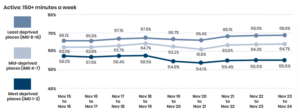
To further highlight this, they also found that activity levels are decreasing in the most deprived areas. Their latest figures show that those being active for 150+ minutes per week in the most deprived areas fell from 58.5% in 2019 to 55.5% in 2024.
The Chiles Webster Batson commission did a summative report in 2020 looking into children growing up in low-income neighbourhoods and found the following figures.
- Seventy-two per cent do not attain the Chief Medical Officer’s physical activity guidelines of one hour a day of enhanced physical activity.
- Only 16 per cent are members of a sports club.
- Just 14 per cent visit leisure centres.
These lower activity rates in deprived areas suggest that families struggling financially, are more likely to miss out on the health benefits of regular exercise.
Keeping active and fit in the winter shouldn’t be a luxury or financial worry. It is very much an issue that has gotten worse in recent years with the cost-of-living crisis, particularly due to the rising costs of utility bills in these venues.
However, can this be fixed? Well, it will unfortunately take time, but it is an issue that is gaining notice. Local organisations are working on bridging this gap.
Sports Alive Northwest is a charity supporting over 1,000 young people across Liverpool, Halton and Knowsley, offering sports programmes and youth engagement.
Sports Alive Operations Manager, Simon Huthwaite said: “Our work supports healthier lifestyles, stronger relationships, safer neighbourhoods, and provides free safe spaces for young people.
“Another key part of our work is detached youth provision. This focuses on reaching at risk young people in some of the most disadvantaged communities. Our youth workers meet young people to deliver engaging activities and provide meaningful guidance and support.”
When asked about the drop in winter participation he said: “Everyone is more stretched than they used to be financially and when things are tight, families have to focus on the essentials and sadly, for most people, food and warmth come before sport and leisure.”

They have also felt that pressure of rising costs. “Our use of other organisations buildings does usually come at a cost to us and as costs (particularly heating) have risen so have our fees.”
Simon said: “In terms of what can be done to help, I think more focussed government priorities that increased funding for local councils so they could subsidise fees for indoor sports venues.”
Some organisations are trialling these subsidised sessions for low-income households, such as ActiveWirral, who offer a ‘Wirral Passport’ which offers 25% off any admissions at their facilities.
Sport England recommends targeted youth vouchers that cover club fees, kit, and travel, to help families in deprived areas access regular exercise. Partnerships between councils, charities, and clubs could also expand community sessions by reducing costs.
Some schools are also opening their halls/ sports facilities for evening or weekend activities, offering low-cost sometimes free options at a time when outdoor activity is limited.
Even private clubs are beginning to offer more flexible payment plans, such as pay as you go and family memberships as reduced prices.
Without a coordinated approach, winter inactivity will continue to hit the region’s most vulnerable families, resulting in a decline in physical and mental health.
Featured Image by Jake Reed