





The leader of a cycling organisation in Runcorn has called for more education for road users as Liverpool City Region invests in active transport.
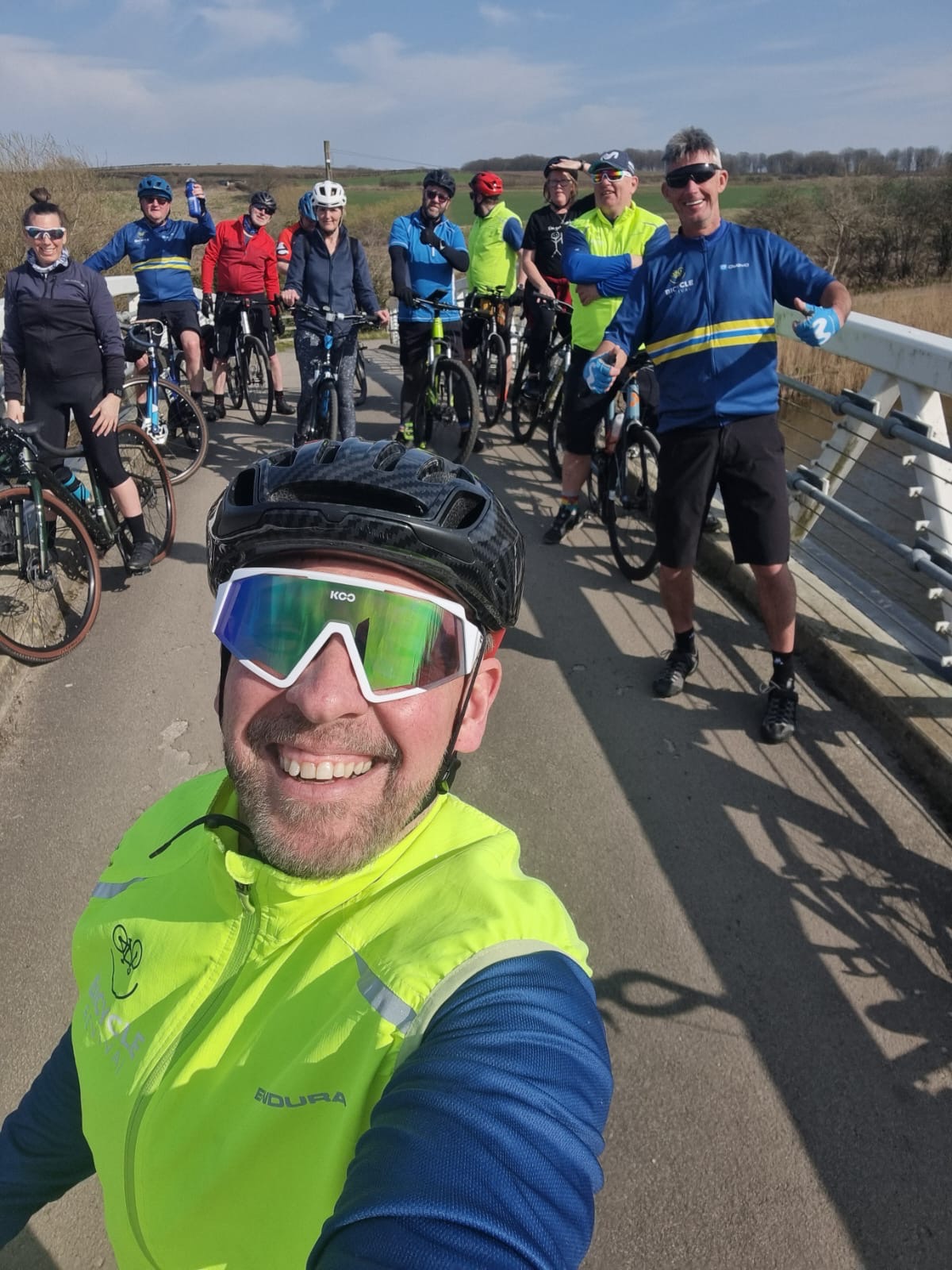
Leham White, who heads Runcorn-based Bicycle Revival, teaches safe cycling.
But as Liverpool City Region bosses act on a plan announced last year to deliver miles of cycling and walking routes, he says more can be done.
Liverpool City Council announced September last year their plan to deliver 260km network of cycling and walking routes across their six boroughs by the end of 2026.
White said: ”What I’m trying to do is educate people, who are out, on how to ride safely on the road. How to approach junctions correctly, when cycle infrastructure is beneficial and when its detriment, when it’s not doing any favours.”

But it’s not just cyclists that are needing to be educated on road safety.
White said: ”We’re not educating drivers on what national standards is.
”So when a cyclist comes out into that primary position, taking control of the lane, there maybe a cycle lane next to them, but it’s not beneficial for the cyclist to be in it.
“And what you’ll get is a lot of drivers saying is, ‘there’s a cycling lane there, get in it pal’ because they assume that you should be in that cycling lane, if there’s one provided. So, I think there’s a lack of education.”
Infrastructure
Drivers are encouraged to be cautious of cyclists. Giving plenty of distance, checking mirrors before turning are simple things that can improve road safety for cyclists.
Yet 30% of people in the region want to cycle but don’t, with four in ten saying safety issues stopped them cycling more, additional work needs to be done to appeal to those eager to ride.
White said: ”I think it’s improved a lot. I think it really has improved a lot, to be honest. There’s still some flaws because there’s times where it brings you to certain areas of not good visibility.
”You’re on a junction, you want to go across and you’ve got traffic to come around at the same time. So there’s still issues around blind spots for traffic.”
Issues also surrounding lighting for cycle areas are often raised. Old bus lanes have been adapted for cyclists, but visibility can be challenged at night and cause risks to riders.
Liverpool City Region implemented a segregated cycle lane on two sides along a busy carriageway. VivaCity Classified Counts data was used to evaluate the scheme.
By comparing the before and after data, it showed a notable increase in active travel users as a result of the new design.
Daily cyclist numbers almost doubled, with 104 cyclists before the lanes where introduced, to 199, an increase of 91%. The number of pedestrians also increased, going from 302 to 444, a 47% change. The proportion of active travel makes up 4.4% at the site, up from 2.3%.
Economic Benefits
Environmental and Health Benefits
By increasing ways for people to access more footpaths and cycle areas, not only are emissions down, but people are able to improve their health.
White said: ”I realised the impact that cycling has on people’s mental health.
”How much it improves mental health, physical and mental well being. So I started bicycle revival on the idea of getting people who don’t cycle (to do so). It’s kind of a cycle club for non cyclists.”
The Index also found that cycling in the Liverpool City Region prevents 597 serious long-term health conditions each year, saving the NHS £7.6 million per year.
Another Index finding found 22,000 tonnes of greenhouse gas emissions such as carbon dioxide, methane and nitrous oxide, are saved every year by choosing to cycle opposed to driving. The equivalent of 50,000 people flying from Liverpool to Tenerife.