
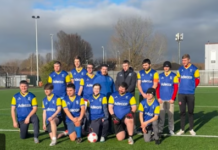



A PhD student at Liverpool John Moores University has called for more education for coaches on Ramadan amid research on how it affects top athletes.
Ibrahim Riaz (pictured) is set to begin new qualitative research on the lived experiences for Muslim sportsmen and women and how their performance is impacted.
Mr Riaz said there are more than 50 Muslim footballers currently playing in the Premier League, whose performances may suffer from the fasting period.
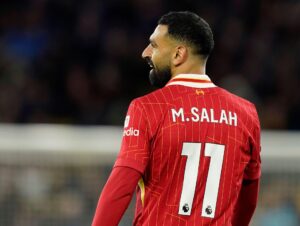
One of the most world’s most notable Muslim athletes is Liverpool’s Mohamed Salah.
Ramadan is considered one of the holiest months of the year for Muslims, where they commemorate the revelation of the Qur’an, and fast from food and drink during the sunlit hours.
From a previous scoping review, Mr Riaz found that athletes often reported limited institutional support and negative attitudes from coaches during Ramadan.
Negative attitudes include some coaches labelling the fasting month as “unhealthy, a burden and counter-productive.”
He said: “There needs to be a basic minimum level of education on this topic, and there isn’t at the moment.
“Many coaches don’t have any clue of what Ramadan is other than abstaining from food and drink.
“Ramadan is a lot more than that, it’s a spiritual experience as well.”
Mr Riaz’s previous study found that during Ramadan, athletes will experience an increase in fatigue, decreases in aerobic and anaerobic performance and changes to body composition.
It also found that athletes usually perform best during the evening, however, during Ramadan, it is the opposite.
Mr Riaz found that peak performance for Muslim athletes come during training sessions/matches in the morning or after iftar – the meal which breaks their fast.
Mr Riaz is conducting his new study as it is one which resonates with him.
He said: “Growing up I was always very competitive; I was always competing in multiple sports.
“I felt the difficulty of Ramadan, but I also felt the absence of any kind of support or advice from the coaches and sometimes that was damaging to my performance.
“I decided to bridge that gap between my background of sports science as well as my studies in Islam and religion.”
(Featured image by Ibrahim Riaz)