
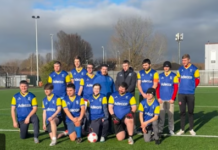

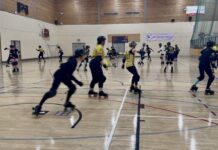
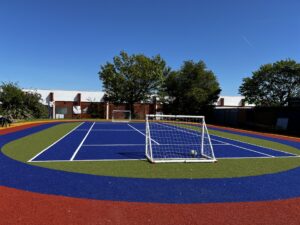
In Everton, the charity Daisy Inclusive UK organises weekly inclusive sports sessions for disabled people.
From changing existing sports to accommodate people of all abilities to coming up with brand new games, volunteers, members, and sports coaches focus on welcoming everyone.
Games of blind football, played with a ringing ball, are a favourite at the place. So are wheelchair races and slaloms.
“We want to prove to people that they can do a lot more than what they think they can do,” said manager Clare Hall.
Sport as inclusion
Sport sessions play a key role in the inclusion of disabled people, taking them out of isolation and providing occasions to socialise.
Michael Davis is a wheelchair user who comes to Daisy “nearly every day”, and not only for sport sessions.
He opened up about the impact the sports sessions had on his daily life and mental health:
“They made me feel very welcome, and now I enjoy coming here, it gets me out of the house.
It brings people out of their comfort zone, and I think it takes a lot of people out of depression. It helps us to make a lot of friends.”
Mr. Davis underlined that a lot depends on the state of mind and how you approach things:
“We try, although I cannot do very much, they try to get all of us to have a go, and they adapt to everyone.”
Breaking barriers and finding solutions
Charles, a volunteer who leads the inclusive sport sessions and physical activities, talked about the challenges and barriers he faces:
“You need to know when to say yes and when to say no. Not all games can be adapted, but if you see a game that is not adaptable, just come up with a new game!
There is always something for everyone, it’s all about the small switches.”
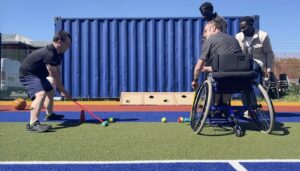
Charles recalled seeing progress from the people he works with.
He also spoke about the human and gratifying aspect of working on making sports more inclusive and accessible to all:
“When you get involved, and you get to know these people, and how to make sport inclusive for them, it’s a human feeling that you have to make a difference. That’s what I’m doing here.”
Charles also reflected on how society can discriminate against disabled people, and why inclusivity and safe spaces to exercise and practice sports are important:
“Many people here can’t go to gyms, because they are not accessible, or because they don’t have the confidence to go.
Sports here are a way to get them moving and make progress.
Most people here have gone forward, and some have even competed. We want to get them to engage more in sport.”
Opening doors
Dave Kelly, chief executive officer at Daisy Inclusive UK, said:
“People who live their lives with disabilities can’t just do differently; it doesn’t work that way. It’s who we are”
Inclusive sport sessions provide a space where people can be themselves and play sports like anyone else, breaking down barriers around able-bodied norms.
Have a look at how it goes here:
(Featured image by Elsa Wiedfeld)