


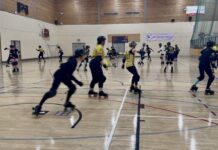
While most people go to ‘watch’ the football, blind and visually impaired fans go to ‘hear’ it, relying on atmosphere and audio-description.
Accessibility in sport venues is a constant topic of discussion, but accommodating every type of disability proves to be extremely challenging, if not impossible.
From entering the stadium to actually being able to enjoy the football, they face new barriers every step of the way.
Dave Kelly, chief executive of the charity Daisy Inclusive UK, talked about the intricacies of attending a live football as a family with a blind person.
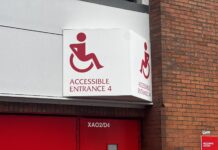
“When you enter the stadium, you have to go through the turnstiles; for somebody who is blind it is basically impossible, so they open a side door for us.
“It makes it nicer to go to the match.”
Making it inside the stadium is the first step; being able to follow the match is another challenge.
Hearing the match: Audio Description:
The Liverpool FC website advertises that visually impaired supporters can order a complimentary audio description headset after purchasing a ticket. They can do this by getting in touch with the club’s disability team.
However, Dave’s wife, Eva Eelen, explained that this is not always available:
“When there is a Premier League match, for the visually impaired or blind fans, you can get headphones so you can follow the audio description from Liverpool FC radio, but when it’s not the Premier League, or when the women are playing, there is no description.”
Laughing, Dave added:
“When we go see the women play with my daughter, because she loves it, she is my audio description.”
The hassle of attending a game:
Dave reflected on how daily life gets more complicated for people with a disability, when most people don’t think twice about things they do every day:
“Going to a match, going anywhere, once you step out your front door that’s when the struggle begins; to get on a bus, to go somewhere…”
His wife Eva added:
“Loads of disabled people will say, ‘I will just stay at home’, because it is so much easier.”
The Liverpool Disabled Supporters Association (LDSA), an independent supporters’ association, works with the club to improve accessibility to the grounds and the inclusion of disabled fans.
“You get a membership card, and you can show it when you get to the grounds with your ticket.”
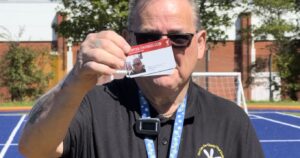
“Then when you get in, they will guide you to your seat,” explained Stephen Gunn, a member of the LDSA.
Getting it right:
Getting inclusivity and accessibility right is all the more important so disabled people can live their lives like everyone else.
Dave said: “It’s only 90 minutes, but it is 90 minutes of getting it right for them (disabled people).”
One way to make sure ground accessibility is on point would be to work with the people who need it, said Dave.
“I know they are doing their best, but what they should do is ask people who know.
“No one has ever come to me to ask, ‘What could we do to make our ground more accessible, more inclusive?’
“They have done a decent job, but they cannot get it 100% perfect, unfortunately.”
These struggles do not stop Dave; his family and a number of others in the same situation go all the way to Anfield to support their team.
And when attending the game in person is not in the cards, it is time to make good use of your imagination to enjoy the broadcast. Dave and Eva talked about their trick to follow the football together from home:
(Featured image by Elsa Wiedfeld)